Boost Performance: Corporate Training Programs for Employees
corporate training programs for employees

Boost Performance: Corporate Training Programs for Employees

Unlock your workforce's full potential and drive organizational success through tailored, impactful training initiatives.

Explore Training Solutions

Key Takeaways

  • ✓ Companies investing in training report 24% higher profit margins.
  • ✓ 70% of employees are more likely to stay with a company that invests in their development.
  • ✓ The global corporate training market is projected to exceed $400 billion by 2027.
  • ✓ Skill gaps are a major concern for 87% of US businesses.

How It Works

1
Assess Needs & Goals

Identify specific skill gaps and organizational objectives through comprehensive analysis. This ensures training aligns directly with business priorities and employee development paths.

2
Design Tailored Programs

Develop custom curricula and select appropriate delivery methods, such as online modules, workshops, or blended learning. Content is crafted to be engaging, relevant, and actionable for your workforce.

3
Implement & Deliver

Launch the training programs, providing necessary resources and support to participants. Effective implementation includes scheduling, platform management, and facilitator guidance.

4
Evaluate & Refine

Measure training effectiveness through feedback, performance metrics, and ROI analysis. Use these insights to continuously improve and adapt future training initiatives for sustained impact.

The Indispensable Role of Employee Development Solutions

A diverse group of adults attentively listening in an indoor business meeting setting. Photo: Pavel Danilyuk / Pexels
In today's dynamic business landscape, marked by rapid technological advancements, evolving market demands, and a highly competitive talent pool, the strategic importance of corporate training programs for employees cannot be overstated. These programs are no longer merely a perk or a compliance checkbox; they are a fundamental pillar of sustainable organizational growth and competitive advantage. Companies that prioritize robust employee development solutions demonstrate a clear understanding that their workforce is their most valuable asset. Investing in training is an investment in future productivity, innovation, and resilience. The U.S. economy, in particular, is witnessing a significant shift, with industries constantly requiring new skills and competencies. From mastering advanced software to developing nuanced leadership capabilities, the demand for continuous learning is pervasive. Without structured training, employees risk falling behind, leading to skill gaps that can impede operational efficiency, stifle innovation, and ultimately impact profitability. Furthermore, a well-executed training strategy significantly boosts employee morale and engagement. When employees feel valued and see a clear path for professional growth within their organization, their loyalty and commitment naturally increase. This directly translates to reduced turnover rates, a critical factor in a tight labor market where replacing skilled talent is both costly and time-consuming. Imagine a scenario where a company consistently provides opportunities for its sales team to learn about the latest CRM tools, advanced negotiation tactics, and customer psychology. The immediate benefit is an uplift in sales performance, but the long-term benefit is a more confident, skilled, and motivated team less likely to seek opportunities elsewhere. Such proactive investment in corporate development fosters a culture of continuous improvement, where learning is embedded into the organizational DNA. This culture not only attracts top talent but also empowers existing employees to adapt to change, embrace new challenges, and contribute more effectively to the company's strategic objectives. Moreover, training programs can be tailored to address specific organizational weaknesses or to prepare the workforce for upcoming strategic shifts, such as adopting new technologies or entering new markets. This proactive approach minimizes disruption and maximizes the likelihood of successful transitions. Therefore, viewing corporate training as an essential strategic imperative rather than a discretionary expense is crucial for any forward-thinking organization aiming to thrive in the 21st century. It's about building a future-ready workforce capable of navigating complexity and driving sustained success.

Crafting Effective Workplace Skills Training Programs
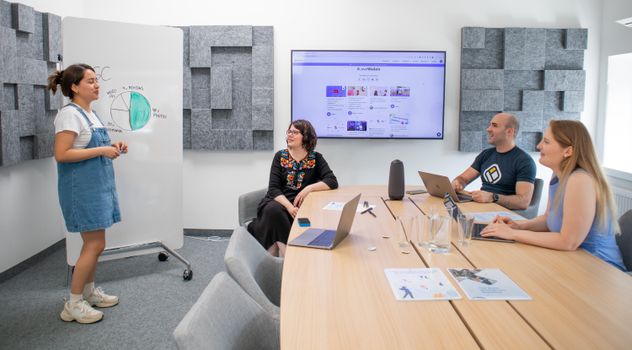
Team collaborating during a meeting with presentation and discussion in a modern office. Photo: Walls.io / Pexels
The effectiveness of corporate training programs for employees hinges on thoughtful design and meticulous execution. It's not enough to simply offer courses; the programs must be strategically aligned with both individual career aspirations and overarching business goals. The first step in crafting truly impactful workplace skills training is a thorough needs assessment. This involves identifying specific skill gaps within various departments or roles, understanding future organizational requirements, and gathering feedback directly from employees and managers. Are there consistent challenges in project management? Is there a need for enhanced digital literacy across the board? Are leadership pipelines insufficient? Answering these questions provides the foundation for targeted training interventions. Once needs are identified, the next phase involves selecting appropriate training methodologies and content. Modern corporate training is far from the traditional 'one-size-fits-all' lecture format. It encompasses a diverse range of approaches, including interactive workshops, e-learning modules, blended learning models, simulations, coaching, mentoring, and even gamified learning experiences. The choice of method should consider the learning objectives, the nature of the skills being taught (e.g., hard skills vs. soft skills), the demographic of the learners, and available resources. For instance, technical skills might be best taught through hands-on labs or e-learning platforms with practical exercises, while leadership development might benefit more from case studies, role-playing, and peer coaching. Personalization is key; adult learners thrive when content is relevant to their roles and career paths. Furthermore, incorporating diverse learning styles ensures broader engagement and retention. For example, some employees might prefer self-paced online modules they can complete at their own convenience, while others might benefit more from live, instructor-led sessions that allow for immediate interaction and Q&A. The content itself must be current, practical, and directly applicable to real-world scenarios. Outdated information or theoretical concepts without practical application will quickly disengage learners. Regular updates to training materials are essential to keep pace with industry changes and best practices. Finally, the success of any training program is significantly influenced by the facilitators or instructors. They must possess not only deep subject matter expertise but also excellent communication, engagement, and motivational skills to create a positive and effective learning environment. Effective workplace skills training is a continuous cycle of assessment, design, delivery, and evaluation, ensuring that the investment yields tangible, measurable improvements in employee performance and organizational capability.

Maximizing ROI with Professional Development Courses and Tools

Colleagues discussing data trends on a whiteboard with graphs and charts. Photo: https://kaboompics.com/ / Pexels
The success of corporate training programs for employees is ultimately measured by their return on investment (ROI). Maximizing ROI means ensuring that every dollar spent on professional development courses translates into tangible benefits for the organization. This requires a strategic approach that goes beyond simply delivering training; it involves meticulous planning, effective implementation, and robust evaluation. One critical aspect is aligning training initiatives directly with strategic business objectives. For example, if a company aims to expand into a new market, training employees on cross-cultural communication or specific regional regulations will have a clear and measurable impact. If the goal is to improve customer satisfaction, then training customer service teams on advanced problem-solving and empathy skills becomes paramount. Leveraging technology plays a pivotal role in maximizing ROI. Learning Management Systems (LMS) provide a centralized platform for delivering, tracking, and managing training content. They enable organizations to scale training efforts, reduce administrative overhead, and provide employees with flexible access to learning resources. Analytics from LMS platforms can offer insights into completion rates, engagement levels, and assessment scores, helping to identify areas for improvement. Furthermore, incorporating interactive tools, virtual reality (VR), and augmented reality (AR) into professional development courses can significantly enhance engagement and knowledge retention, especially for complex or hands-on skills. Imagine using VR for safety training in hazardous environments or AR to guide technicians through equipment repairs – these immersive experiences lead to faster learning and fewer errors. Evaluation is the cornerstone of maximizing ROI. This isn't just about post-training surveys; it involves measuring pre- and post-training performance metrics, such as productivity improvements, error reductions, sales increases, or customer satisfaction scores. The Kirkpatrick Model of training evaluation (Reaction, Learning, Behavior, Results) provides a robust framework for assessing effectiveness at multiple levels. By systematically tracking these metrics, organizations can identify which programs are delivering the greatest value and which need refinement or discontinuation. This data-driven approach allows for continuous optimization of the training portfolio, ensuring resources are allocated to the most impactful initiatives. Moreover, fostering a culture of continuous learning and application is essential. Training should not be a one-off event but an ongoing process supported by management and integrated into daily work. Providing opportunities for employees to apply newly acquired skills, offering follow-up coaching, and recognizing achievements can significantly enhance the long-term impact of professional development courses. By strategically selecting, delivering, and evaluating training programs, companies can transform their investment into a powerful engine for organizational success and sustained growth. Proactive engagement with corporate learning ensures that every program contributes to a more skilled, adaptable, and high-performing workforce, directly impacting the bottom line.

Avoiding Common Pitfalls in Organizational Learning Strategies

Low angle view of diverse team assembling large puzzle pieces, symbolizing unity and cooperation. Photo: Diva Plavalaguna / Pexels
While the benefits of corporate training programs for employees are undeniable, many organizations fall into common traps that undermine their effectiveness. Avoiding these pitfalls is crucial for ensuring that organizational learning strategies yield their intended results and deliver significant value. Here are some key mistakes to steer clear of: * **Lack of Strategic Alignment:** One of the most prevalent errors is offering training that isn't directly linked to business objectives or identified skill gaps. This often results in 'training for training's sake,' leading to wasted resources and employee disengagement. Ensure every program has a clear purpose and measurable outcome tied to organizational goals. * **One-Size-Fits-All Approach:** Treating all employees as having the same learning needs and preferences is a recipe for failure. Different departments, roles, and even individual employees have unique requirements. Customization and personalization, offering a variety of learning formats, are far more effective. * **Ignoring Pre- and Post-Training Support:** Training is not a singular event. Without proper preparation (e.g., setting expectations, pre-reading) and follow-up (e.g., opportunities to apply skills, coaching, reinforcement), knowledge retention and behavioral change will be minimal. Managers must be involved in supporting the application of new skills. * **Insufficient Evaluation:** Many companies fail to adequately measure the impact of their training programs beyond simple satisfaction surveys. Without rigorous evaluation using metrics like performance improvement, ROI, and behavioral changes, it's impossible to know if the training was effective or how to improve future initiatives. * **Lack of Leadership Buy-In:** If senior leadership doesn't visibly support and participate in learning initiatives, employees will perceive training as unimportant. Leaders must champion learning, allocate necessary resources, and demonstrate their own commitment to continuous development. * **Outdated Content and Delivery Methods:** Using stale materials or relying solely on traditional lecture-based formats in a rapidly evolving world will quickly disengage learners. Regularly update content to reflect current industry trends and explore innovative delivery methods like microlearning, gamification, and virtual reality. By proactively addressing these common missteps, organizations can significantly enhance the impact and success of their corporate training programs for employees, transforming them into powerful drivers of talent development and business growth.

Comparison

FeatureIn-House TrainingExternal VendorOnline PlatformBlended Learning
CustomizationHighMediumLow to MediumHigh
Cost EfficiencyVariable (High setup, Low recurring)HighLowMedium
Expertise AccessLimited to internalHighMedium to HighHigh
ScalabilityMediumMediumHighMedium
FlexibilityMediumLow to MediumHighHigh
Measurable ROI
Initial Setup TimeLongMediumShortMedium

What Readers Say

"Our corporate training programs for employees completely transformed our sales team's approach. The customized modules on advanced negotiation tactics led to a significant increase in closed deals, far exceeding our quarterly targets. Truly impactful and well-delivered content!"

Sarah J. · Austin, TX

"As a manager, I've seen firsthand the positive shift in team dynamics and productivity since we implemented new leadership development training. Employees feel more empowered and engaged, and the quality of project deliverables has noticeably improved."

Mark P. · Chicago, IL

"The professional development courses offered through our company's corporate training programs for employees helped me acquire essential data analytics skills. This directly resulted in my promotion to a senior analyst role within a year, demonstrating a clear career progression path."

Emily R. · Seattle, WA

"While the technical training was excellent and highly relevant, I felt some of the soft skills modules could have been more interactive. Overall, a very positive experience that definitely enhanced my capabilities, but there's always room for minor tweaks."

David L. · Boston, MA

"Our HR department leveraged these training solutions to onboard new hires more efficiently, especially for remote roles. The blend of online modules and virtual workshops made the process seamless and ensured consistent skill development from day one, regardless of location."

Jessica M. · San Francisco, CA

Frequently Asked Questions

What are the most effective types of corporate training programs for employees?

The most effective programs are typically those that are tailored to specific organizational needs and employee roles. This includes leadership development, technical skills training, soft skills (e.g., communication, problem-solving), compliance training, and onboarding programs. Blended learning approaches, combining online and in-person elements, often yield the best results for engagement and retention.

How can we measure the ROI of our employee training initiatives?

Measuring ROI involves tracking key performance indicators (KPIs) before and after training, such as productivity rates, sales figures, customer satisfaction scores, employee turnover, and error reduction. Using evaluation models like the Kirkpatrick model (Reaction, Learning, Behavior, Results) can help systematically assess the impact and financial return of your training investments.

What's the best way to implement a new training program across a large organization?

Start with a pilot program in a smaller department to gather feedback and refine the content and delivery. Use a robust Learning Management System (LMS) for scalability and tracking. Ensure strong communication from leadership, clearly outlining the benefits, and provide ample support and resources to employees throughout the training period. Phased rollouts can also help manage logistics.

Are corporate training programs a cost or an investment?

Corporate training programs are unequivocally an investment. While there is an upfront cost, the long-term benefits – including increased productivity, higher employee retention, improved innovation, enhanced employee morale, and competitive advantage – far outweigh the expenses. Companies that view training as an investment often see higher profit margins and sustained growth.

How do online corporate training programs compare to in-person workshops?

Online programs offer flexibility, scalability, and often lower costs, making them ideal for self-paced learning and broad reach. In-person workshops excel in fostering direct interaction, networking, and hands-on practice for complex skills. The 'best' option often involves a blended approach, leveraging the strengths of both formats to create a comprehensive and engaging learning experience.

Who should use corporate training programs for employees?

Every organization, regardless of size or industry, can benefit from corporate training programs. They are essential for companies looking to upskill their workforce, address skill gaps, improve employee retention, foster a culture of continuous learning, enhance leadership capabilities, and maintain a competitive edge in their respective markets.

What are the risks of NOT investing in employee training?

The risks include significant skill gaps leading to reduced productivity and quality, higher employee turnover due to lack of growth opportunities, decreased innovation, difficulty adapting to market changes, increased compliance risks, and ultimately, a decline in competitive advantage and profitability. It can also lead to a disengaged and demotivated workforce.

What are the future trends in corporate training programs?

Future trends include a greater emphasis on personalized learning paths, microlearning (short, focused modules), AI-powered learning platforms, virtual reality (VR) and augmented reality (AR) for immersive experiences, gamification for increased engagement, and data analytics to optimize training effectiveness and ROI. The focus will continue to be on continuous, adaptive, and skills-based learning.

Elevate your workforce and propel your organization forward with cutting-edge corporate training programs for employees. Invest in tailored learning solutions today to cultivate a skilled, engaged, and future-ready team that drives unparalleled success.

Topics: corporate training programs for employeesemployee development solutionsworkplace skills trainingprofessional development coursesorganizational learning strategies
Leo List

DK Escorts LU Escorts AT Escorts SE Escorts FI Escorts CH Escorts DE Escorts HR Escorts IE Escorts GR Escorts CZ Escorts NO Escorts BE Escorts FR Escorts SI Escorts IL Escorts NL Escorts PL Escorts HU Escorts ES Escorts IT Escorts PT Escorts SK Escorts RO Escorts ZA Escorts UY Escorts US Escorts UK Escorts NZ Escorts AU Escorts
Brampton weed
Adultwork EstrelaBet Vai de Bet R7 Bet Betão Galera Bet Rainbet Bet9ja Shop SportyBet BetKing Sisal Loto Foot Hollywoodbets YesPlay Odibets RushBet Jugabet BetWarrior BetCity MSport betPawa Fortebet